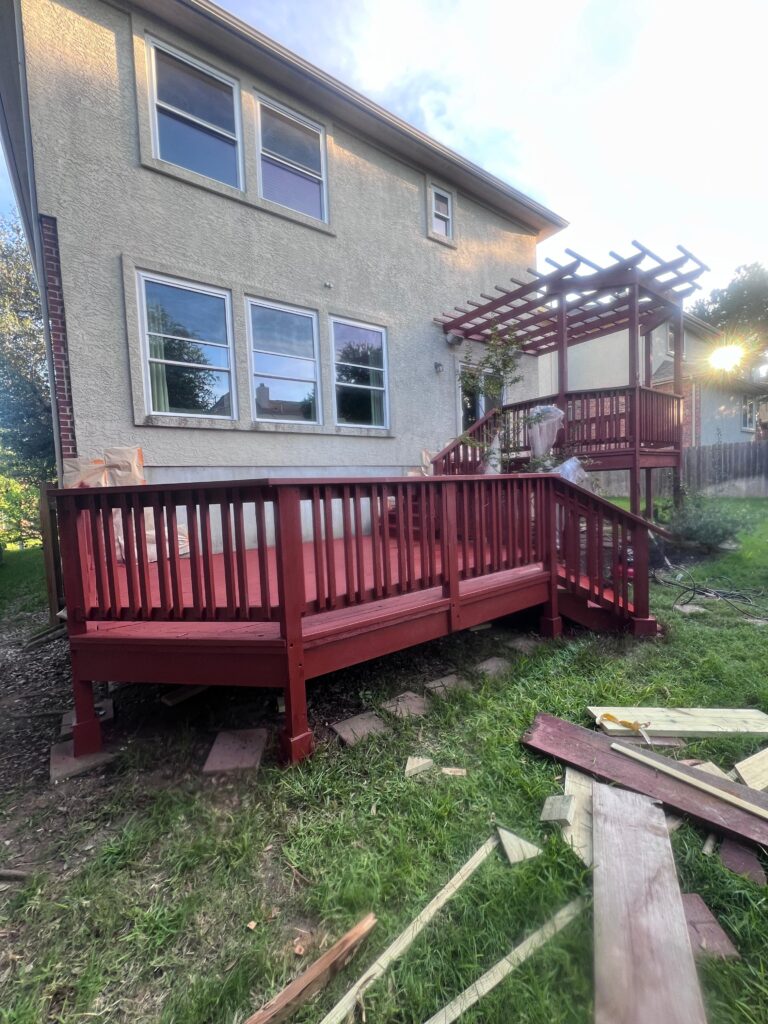
Building a pergola in Pflugerville, TX starts with one question: how do you want to use the space?
If the answer is outdoor dinners, a shaded place to sit, or somewhere to enjoy the backyard without sitting in direct Texas sun, the design should start there. The size of your table, the direction of afternoon sun, the condition of your patio, and even where you want to put a grill can all affect the final layout.
A pergola can look simple when you see the finished structure. Getting the posts, footing, framing, spacing, and placement right is where the real work happens.
If you are planning a pergola for your Pflugerville home, here are the things worth figuring out before anyone starts cutting lumber.
What Is a Pergola?
A pergola is an outdoor structure made from posts, beams, and rafters. The roof is usually open, so you get some shade without completely closing off the space.
You can build a pergola over an existing patio, create one as a separate backyard structure, or attach it directly to the house.
The right setup depends on what is already there and what you want underneath it.
For example, a pergola over a dining area needs enough room for the table and chairs, plus space to pull the chairs out. A pergola intended for two lounge chairs can be much smaller. If you want a grill, outdoor kitchen, ceiling fan, or lighting underneath it, those choices need to be considered before the dimensions are finalized.
That is why it is worth planning the space around how you will actually use it instead of starting with a standard pergola size.
Why Build a Pergola in Pflugerville, TX?
Pflugerville gets plenty of sunshine, and a backyard that feels comfortable in the morning can become a very different place once the afternoon sun hits it.
A pergola can give you a defined area for sitting and entertaining while still keeping the backyard open.
Picture a patio with a six person table sitting in full sun. You may have plenty of space, but that does not mean you will want to use it at 3 PM in July. Adding a properly positioned pergola can make that same patio much more useful.
Some homeowners want a place for weekend meals. Others want somewhere to sit with a cup of coffee, set up an outdoor TV, or give guests a little shade during a backyard gathering.
The important part is deciding what you want the pergola to do before deciding how it should look.
If the pergola is part of a larger project, you may also want to look at home remodeling improvements that can be completed around the same time.
How Much Does a Pergola Cost in Pflugerville, TX?
There is no single price for a pergola because two projects that look similar in a photo can require very different amounts of work.
A small freestanding pergola built over an existing, suitable patio is one project. A larger structure that needs new footings, additional concrete, custom framing, and attachment to the house is another.
The size is an obvious cost factor, but it is not the only one.
The type and amount of lumber matter. So does the number and size of the posts and beams. The foundation matters too. If the existing patio cannot support the planned post locations, you may need additional concrete work before the pergola can be built.
Finishing also changes the price. A basic stained structure is different from one that includes more detailed trim, electrical planning, lighting, or other features.
The best way to price a pergola is to look at the actual space first. That tells you what needs to be built instead of guessing from a photograph or a generic square foot price.
What Type of Pergola Should You Build?
The first decision is usually between an attached pergola and a freestanding pergola.
An attached pergola is connected to the house. This can work especially well when the existing patio is directly behind the home and you want the outdoor area to feel like an extension of the living space.
The connection needs to be planned carefully. You cannot simply bolt a large structure wherever there is convenient siding. The framing behind the exterior finish needs to be considered, and the connection needs to be protected from water.
A freestanding pergola gives you more freedom.
Suppose the house sits on one side of the backyard but the best place for afternoon shade is several feet away. A freestanding structure can be positioned around the seating area instead of being forced against the house.
The choice comes down to the layout of the property and how you want to use the finished space.
What Is the Best Material for a Pergola in Pflugerville?
Wood is a popular choice for residential pergolas because it looks natural and can be stained or finished to suit the house.
Cedar is often chosen for its appearance and natural resistance to decay and insects. It can be allowed to weather naturally or finished to maintain more of its original color.
Pressure treated pine is another common option. It can make sense when keeping material costs under control is important. Freshly treated lumber can also contain moisture, so it needs to be handled and finished appropriately as it dries.
Neither material is automatically the right answer for every backyard.
If you want a more natural finished appearance and are comfortable investing more in the material, cedar may be worth considering. If the budget is tighter, pressure treated lumber can be a practical alternative.
The important thing is to choose the material before construction begins, not halfway through the project when the framing has already been planned around something else.
How Should a Pergola Be Designed for Texas Sun?
This is one area where location matters more than many homeowners expect.
If you mainly use your backyard in the afternoon, look at where the sun hits the patio at that time. A pergola that provides pleasant morning shade may do very little for you when the west sun is coming across the yard later in the day.
Rafter spacing also matters. A pergola with widely spaced rafters lets more sunlight through. Tighter spacing provides more shade, although it still will not give you the same coverage as a solid patio roof.
Height matters too. A very tall pergola can look impressive, but raising the structure also changes the angle at which sunlight reaches the space underneath.
Before choosing the dimensions, stand in the area at the time you expect to use it most. Notice where the sun is coming from and where your furniture will sit.
That simple exercise can prevent a common problem. You spend money creating a beautiful shaded area, then discover that the chair you actually use is sitting in direct sunlight.
Why the Foundation Matters in Pflugerville
The posts may be the part of the pergola everyone notices, but what is holding those posts in place matters just as much.
Central Texas has areas with expansive clay soil. That soil can move as its moisture level changes. If the support underneath a structure is not properly planned, movement over time can cause problems.
The footing needs to match the size and design of the pergola and the conditions at the property.
An existing concrete patio also needs a closer look. A patio may look perfectly solid from above while still being unsuitable for the post locations or the loads created by the new structure.
This is especially important if someone suggests simply cutting or drilling through the existing slab without first figuring out how thick it is and what is underneath it.
If new footings or a new patio are needed, it makes sense to plan that work before the pergola framing begins.
Texan Handyman Services also handles concrete work as part of larger home improvement projects.
Can You Build a Pergola Over an Existing Patio?
Often, yes. But the existing patio should be checked before the pergola design is finalized.
Start by looking at the condition of the slab. Large cracks, settlement, uneven areas, drainage problems, or questionable construction can change the plan.
Then look at where the pergola posts need to go.
Imagine you have a patio that is 12 feet wide, but the ideal pergola design puts two posts directly where an existing step or drainage channel sits. That needs to be resolved before construction, not after the posts have already been ordered.
The same applies to doors, windows, exterior outlets, hose connections, and other features around the house.
A good layout accounts for all of those things at the beginning.
If the patio needs work before the pergola goes up, handling both projects together can save you from having to undo finished work later.
Do You Need a Permit to Build a Pergola in Pflugerville?
Possibly. The requirements depend on the specific project and the current rules that apply to your property.
The size of the pergola, whether it is attached to the house, where it sits on the lot, its height, and other construction details can affect what approvals are needed.
There can also be HOA requirements. An HOA may have rules about setbacks, colors, materials, structure height, or where an outdoor structure can be placed.
Do not assume that a small pergola automatically means no paperwork is required.
Before construction starts, check the current City of Pflugerville requirements and any applicable HOA rules. If the project requires permits or approvals, those should be addressed as part of the planning process.
How Long Does Pergola Installation Take?
The construction itself may take only a few days for a straightforward pergola, but the complete project can take longer.
The biggest variables are the design, foundation, size, material preparation, finishing, and any work that needs to happen before the structure can be built.
For example, a simple pergola over a suitable existing patio is much more straightforward than a project that requires new concrete footings.
If the pergola is attached to the house, the connection also needs to be planned and built carefully.
Finishing can add time as well. Staining or sealing new wood is not something to rush simply to finish the job faster.
The important thing is to establish the scope before construction begins so you know what has to happen first and what the finished project will involve.
What Makes a Custom Pergola Different?
A custom pergola makes sense when a standard kit does not fit the way you actually use the backyard.
Maybe your patio is 14 feet wide and a standard kit leaves awkward gaps. Maybe the back door opens toward the area where one of the posts would normally go. Maybe you want the structure large enough for a dining table but do not want it to extend into the walkway.
Those are design problems, not problems you solve by simply buying a larger kit.
The same applies if you want to include a ceiling fan, outdoor lights, privacy screens, or a specific furniture arrangement.
The pergola should be planned around those features from the beginning.
This is also where craftsmanship matters. Straight posts, properly aligned beams, clean connections, and consistent spacing are small details, but they are exactly the details you notice when you stand underneath the finished structure.
You can also see examples of completed work on the Our Work page.
Pergola vs. Patio Cover: Which Is Better?
A pergola and a patio cover are not the same thing.
A traditional pergola has an open roof structure. It gives you shade while keeping the space feeling open and allowing air and sunlight through.
A patio cover provides more complete protection from direct sunlight and rain.
If your main goal is to create a comfortable outdoor sitting or dining area while keeping the backyard open, a pergola may be a good fit.
If you want to sit outside during a summer rainstorm or block as much direct sunlight as possible, a solid patio cover may make more sense.
Think about what you are trying to solve.
If you are mostly trying to make an attractive patio more usable, a pergola can be enough. If weather protection is the priority, you may want to look at a different structure.
Can a Pergola Be Combined With Other Backyard Improvements?
Absolutely. In many cases, the pergola is only one part of the project.
You might already be planning a new concrete patio. You may want to replace an old fence at the same time. You may also want to improve the area around the back door so everything works together.
For example, building the pergola before fixing a damaged patio can create unnecessary extra work. The same applies to fencing. If a new fence will change where people enter or move through the backyard, that should be considered when laying out the pergola.
Texan Handyman Services can help with related projects, including fence work, concrete improvements, and other home improvement needs.
You can also explore the company’s services to see what may fit into your project.
Choosing a Pergola Builder in Pflugerville, TX
Do not choose a pergola builder based only on a picture of a finished structure.
Ask how the project will be supported. Ask what happens if the existing patio is not suitable. Ask how an attached pergola will connect to the house. Ask what material is being used and how it will be finished.
You should also be comfortable with the estimate and the scope of work before construction begins.
A good contractor should be able to walk through the project with you and explain what needs to happen before the first post goes in.
Texan Handyman Services LLC works with homeowners throughout Pflugerville and the surrounding Central Texas area. The company handles outdoor improvements as well as broader home repair and remodeling projects.
You can learn more about the team on the About Us page and see the full range of handyman services available.
Frequently Asked Questions About Building a Pergola in Pflugerville, TX
How much does it cost to build a pergola in Pflugerville, TX?
Pergola costs vary based on size, material, design, foundation, location, and finishing. A small freestanding pergola over a suitable patio will generally involve less work than a large attached structure requiring new footings or concrete work. An on site assessment gives you a much more useful estimate.
What is the best wood for a pergola in Pflugerville?
Cedar and pressure treated pine are both common choices. Cedar offers a natural appearance and good resistance to outdoor conditions. Pressure treated pine can be a practical option when the initial material budget is more important. The right choice depends on the design, finish, budget, and maintenance expectations.
Does a pergola need a concrete foundation?
The foundation depends on the pergola design, soil conditions, post locations, and existing surface. Some projects can work with an existing patio when its construction is suitable. Other designs require dedicated footings. The support should be determined before construction rather than after the posts are in place.
Can I build a pergola over my existing concrete patio?
A pergola can often be built over an existing patio, but the slab should be inspected first. Its condition, thickness, drainage, and the planned post locations all matter. If the existing patio is not suitable, additional concrete work may be needed.
Do I need a permit for a pergola in Pflugerville?
It depends on the project. Size, height, location, attachment to the home, and other construction details can affect permit requirements. HOA rules may also apply. Check the current City of Pflugerville requirements and any HOA guidelines before construction begins.
Is an attached or freestanding pergola better?
An attached pergola can work well when you want to extend an existing patio directly from the house. A freestanding pergola gives you more flexibility when the best location is away from the home. The layout of your property and the way you plan to use the space should determine the choice.
How long does it take to install a pergola?
A straightforward pergola may take a few days to construct, but the full timeline depends on the foundation, size, materials, finishing, and any preparation work. New concrete, permits, or an attached design can add time.
Can a pergola provide enough shade for a patio?
A pergola can provide useful shade, but the amount depends on its orientation, height, rafter spacing, and roof design. If afternoon shade is important, the structure should be positioned with the afternoon sun in mind rather than simply centered over the patio.
Can a pergola be part of a larger home improvement project?
Yes. A pergola can be planned alongside concrete work, fencing, patio improvements, and other outdoor projects. Coordinating the work can prevent situations where one finished project has to be disturbed to complete another.
Ready to Build a Pergola in Pflugerville?
If you already have a spot picked out, the next step is to look at the space and figure out what will actually work there.
Texan Handyman Services can help you think through the size, placement, materials, foundation, and other details before construction begins. Whether you want a simple freestanding pergola or a larger structure connected to the house, the goal is to build something that fits the way you use your backyard.
Contact Texan Handyman Services to discuss your project and request an estimate, or call 512 825 7631.
You can also visit the home page or browse the blog for more information about home improvement and handyman projects in Central Texas.
If you are planning improvements in another nearby area, Texan Handyman Services also provides home remodeling in Pflugerville, TX and home remodeling in Round Rock, TX.
For another local example, you can also read about building a pergola in Round Rock, TX.